Christian Horner’s memoir ‘Drive’ is released today, telling the story of how he started out as an aspiring Formula 1 driver before becoming one of the most successful team bosses of all time.
Prior to our extensive interview with Christian Horner last week, which is available both on YouTube and in podcast form, we read every page and have picked out five attention-grabbing – and previously little-known – things that caught our eye.
1 Horner tested Lawrence Stroll’s F1 car as a junior
When he was racing in Formula 3, Horner was briefly on Lotus’s books as what we’d today call a junior driver. This came with a price, with a £170,000 “annual fee” that Horner explains battling to raise – with a little help suspected to have come from a certain Nigel Mansell.
He only had one opportunity to drive an F1 car while trying to become a professional racing driver when he shook down a Lotus that had been sold to Lawrence Stroll, now Aston Martin F1 co-owner, at the Hethel test track.
“The sound of the engine exploding into life had nearly given me a heart attack,” writes Horner. “Its power felt incredible and intimidating. Everything about the Lotus seemed primed to explode.
“The chassis trembled angrily and my hands vibrated on the steering wheel. It was as if I’d been strapped to the front of a rocket ship, and during several brief laps, my head snapped back against the headrest when accelerating; during braking, my ribs felt compressed as I was thrust forward in my seat and bucked against the harness.
“My eyes must have looked like saucers afterwards. I felt high. The power of a Formula 1 car seemed limitless.”
That, and a season in International F3000, was as close as he got to F1 as a professional driver.
2 Lauda offered Horner the Mercedes team boss job
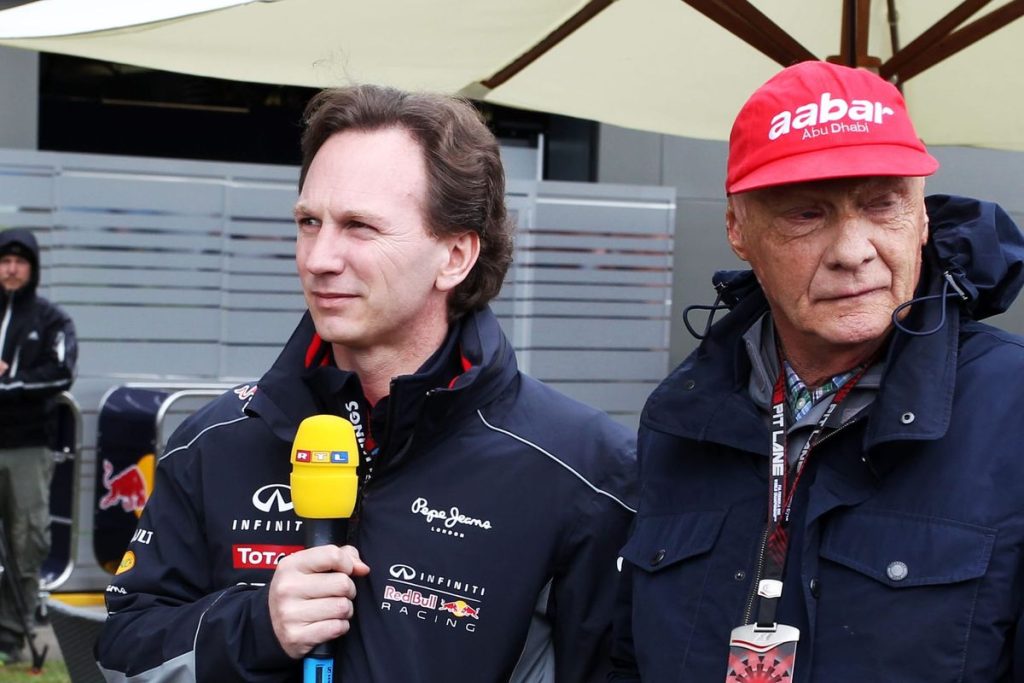
When Horner was in the middle of leading Red Bull’s first spell of F1 dominance, he was approached by Niki Lauda to take over as Mercedes team principal in late 2012.
“During the Christmas break, Niki came to my house and asked me to join Mercedes as his team principal,” writes Horner. “I was caught off guard. Leaving Red Bull had never
crossed my mind. When he then laid out a series of dazzling numbers, I realised he was discussing my potential salary.”
Horner claims to have turned down the offer, citing how he had built Red Bull Racing from scratch and his loyalty to Red Bull and Dietrich Mateschitz. Toto Wolff was then appointed to the role.
3 Coulthard may have saved Horner’s Red Bull job
Red Bull’s original deal with Horner comprised two years and an option for 2007. But he explains in his book how he heard via Helmut Marko ahead of the 2006 Monaco Grand Prix that this option was not expected to be picked up – something that was later confirmed by a letter.
“There was no explanation for why,” writes Horner. “I felt blindsided, but rather than becoming despondent, I focused on the race and worked out my next steps.”
It turns out that the next step was Coulthard taking the first Red Bull podium in F1 with third place in Monaco. Coulthard, who was unaware of how this situation played out behind the scenes, therefore played an important role in ensuring Horner stayed on.
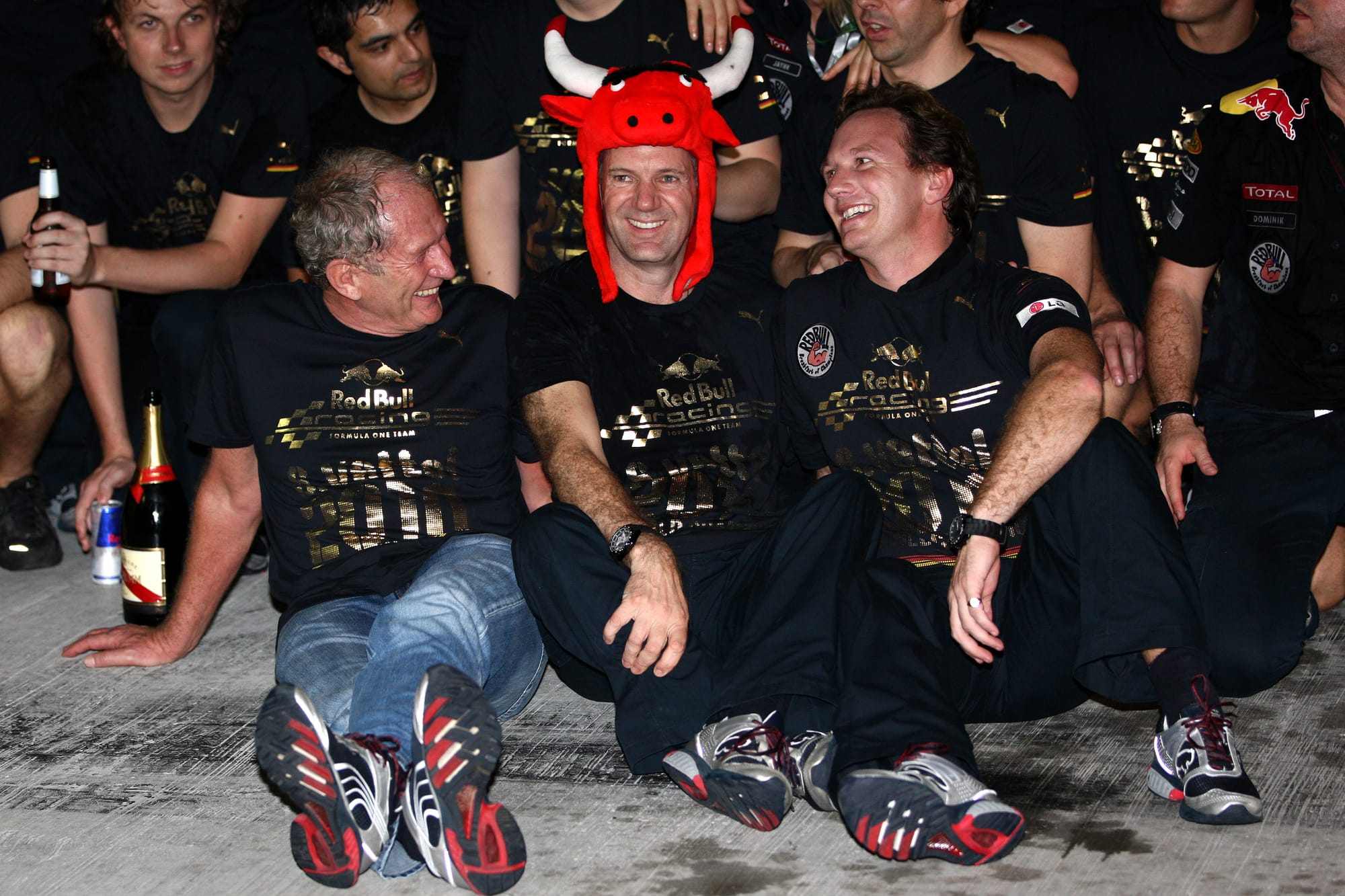
There’s plenty of criticism of Marko in Horner’s memoir, albeit offset by gratitude for his role in bringing him in as team principal in the first place. One key aspect is the extent to which Marko’s comments to the media frustrated Adrian Newey.
“His media activities were equally frustrating because he happily shared insider information with the platforms he favoured,” writes Horner. “Aside from presenting a self-styled
position of authority to the media, his outspoken opinions about Red Bull’s drivers, cars, engineers, strategies and anything and everything to do with our racing approach were being announced to the world.”
Horner describes Newey as growing “more agitated with every leak”, given his desire not to give away any technical secrets unnecessarily.
5 Ricciardo walked out of a handshake deal with Red Bull
When Daniel Ricciardo called Horner to tell him that “I’m going to Renault” after the 2018 Hungarian Grand Prix, there was frustration. Not least because Red Bull had agreed to all of Ricciardo’s terms with a one-year deal and a pay packet no worse than the $25million a year he was offered by Renault.
“I felt so disappointed,” writes Horner. “Dietrich had offered Daniel a great deal; it had been agreed with a handshake. Now he was leaving us for Renault, when several other superior teams, McLaren included, wanted to sign him. None of it made sense to me.”
Horner suggests the need to get out of a team Max Verstappen had made his own was key to Ricciardo’s choice.