How forgotten piece of NFL history pushed Roger Goodell’s No. 2 to golf | News
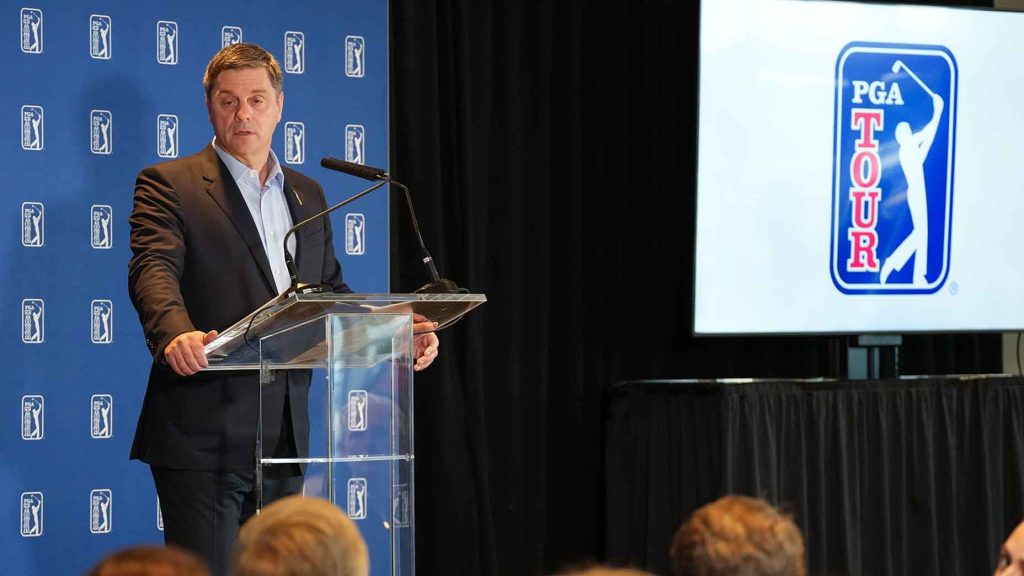
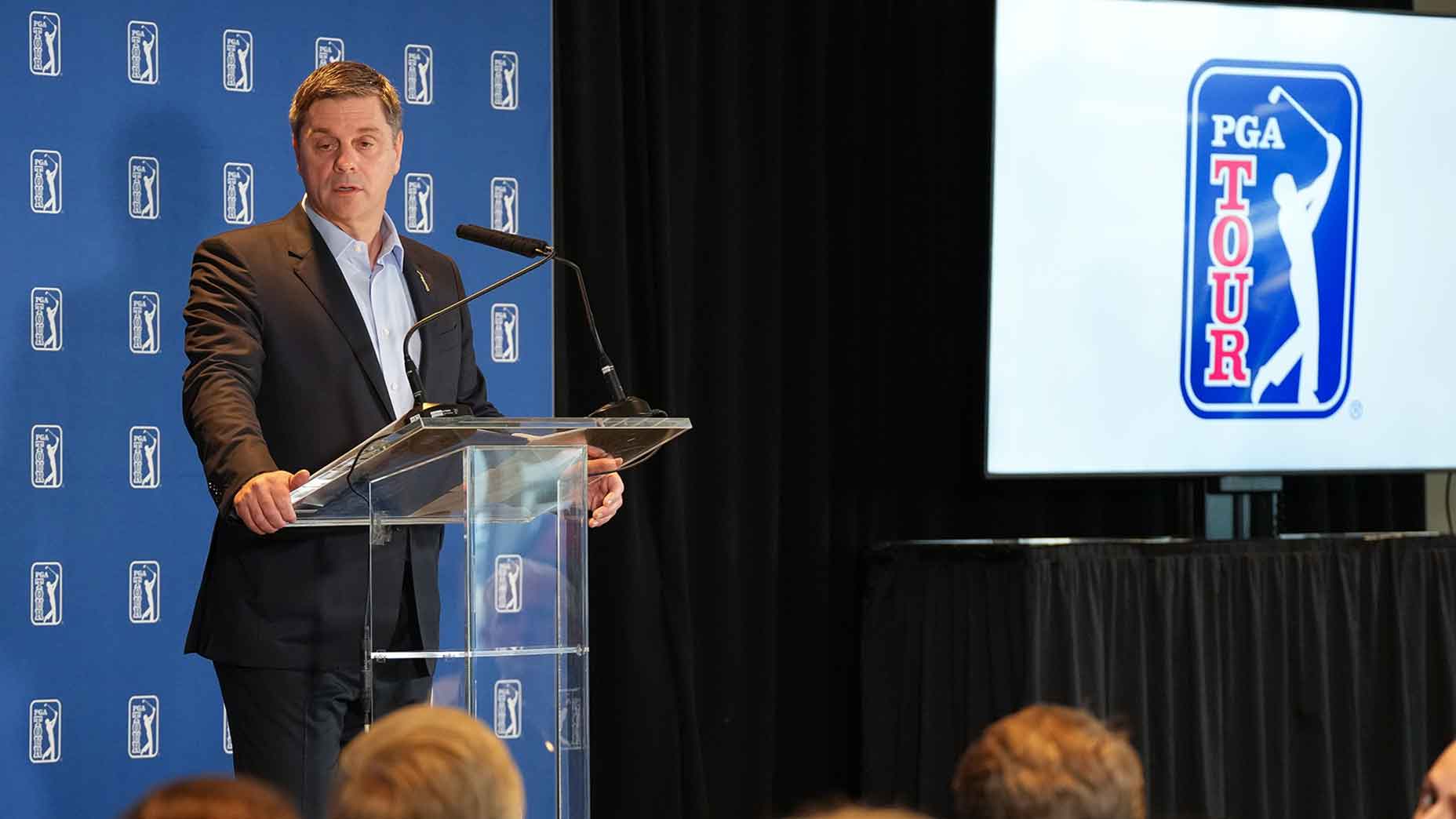
In the long and storied history of golf industry corporate hopscotch, few moves stand out like Brian Rolapp’s hire at the PGA Tour.
Mostly because few moves have ever been so surprising.
The question looming over Rolapp’s arrival in golf wasn’t why the PGA Tour wanted Rolapp, the long-time No. 2 to NFL commissioner Roger Goodell. It was the opposite: Why did Rolapp want the PGA Tour?
Consider the two sides. On one end of the room sat Rolapp, a man who had earned a reputation as perhaps the most valuable non-commissioner in pro sports, negotiating more than $100 billion in media rights deals and pioneering the NFL’s successful launch of Thursday Night Football. Rolapp wasn’t just an important piece of the NFL monolith — he was, by all accounts, still ascending, having spent most of the previous decade on the shortlist to succeed Goodell whenever the 67-year-old commissioner elected to retire.
And on the other end of the room? The PGA Tour. An organization that, until very recently, could be best described as strangely bureaucratic and deeply set in its ways. A place resurgent after beating back LIV’s offensive, but still totally unsure of how to move forward. A place ripe for change, but still mired in a very large dose of uncertainty.
Why would Rolapp surrender his role at the NFL for a job at a tour in crisis? The logic seemed questionable at best — and that was before considering that Rolapp was, by his own admission, not much of a golfer.
When pressed about his motives in his early interviews after taking the Tour job, Rolapp took the high road, pointing to the Tour’s strength and his admiration for its leaders and players. But many suspected these answers were only half-truths. If Rolapp was hired by the Tour for his acumen as a dealmaker and visionary, he had to have some conception of how the deal worked out for him. He might have believed in the Tour’s strength and admired its leaders, but on a deeper level, he had to believe a job at the Tour could be better than a job at the NFL.
In a recent panel with The Athletic’s Andrew Marchand, Rolapp offered a glimpse into his personal calculus behind his arrival — a decision that he said came back to a simple explanation: History.
According to Rolapp, history told him that if you were a sports executive hoping to make a lasting mark, you should find the places in crisis. And why? Because every great era of prosperity and opportunity in professional sports originated first with a period of chaos.
“Where most people saw chaos, I saw the AFL-NFL in the 60s,” Rolapp told Marchand. “I saw a CBA crisis for baseball that reset the sport.”
The most obvious example for Rolapp was the one that hit closest to home: The AFL-NFL rivalry of the early 1960s. After all, in the early 60s, future Kansas City Chiefs owner Lamar Hunt helped spearhead football’s own LIV moment — joining a series of rebel owners to form a new league to compete with the NFL.
The NFL-AFL crisis didn’t have foreign funding, but it did have a powerful and savvy group of owners capable of putting a real scare into the establishment. Among the AFL’s earliest and most notable successes was a multi-year rights agreement with ABC — a TV deal that gave the league real money and real power to sign away collegiate players from the NFL, challenging the league’s years-long monopoly over the sport. Later, the upstarts used that money to begin poaching new talent, including New York Jets quarterback Joe Namath.
Ultimately, the league realized it had more to gain from a resolution than from continued conflict. In 1966, Lamar Hunt convened an urgent meeting at Dallas Love Field Airport to agree to a truce. (The AFL became what we now know as the AFC, the NFL became the NFC; and the two conferences oriented their season around a championship game between the best team from each, which Hunt would later name the “Super Bowl.”)
That truce created the modern NFL as we know it, but the conflict between the AFL and NFL may have been more influential. After all, it was the threat of being usurped by a new competitor that led the NFL to widely expand its number of franchises, recalibrate its approach to TV as a moneymaking engine and create the season-ending championship format that even casual sports fans now consider a national holiday. If not for the very real upheaval caused by the rebel league, the NFL might not have reached the structural change that paved the way for the league’s current golden age.
Back in 2025, Rolapp saw the PGA Tour facing a similar moment of transformation. Like the AFL and NFL, the Tour had an entrenched hierarchy, a threatening competitor and an establishment suddenly yearning for substantial change.
As Rolapp explained to Marchand, this was the real draw of the PGA Tour job: He could shape a brand-new future for an entire sport.
“The Tour is having their crisis; it’s just later than everybody else had their crisis,” Rolapp said. “That, to me, is an opportunity.”
As it turned out, Rolapp’s “opportunity” thesis was spot-on. In just his first year with the Tour, he spearheaded some of the biggest changes in pro golf in decades — changes that stratified the sport between the “Championship” and “Challenger” series, ended the long-running practice of sponsor exemptions, and, yes, introduced a brand-new championship format in the hopes of capturing casual golf fans.
Interestingly, Rolapp doesn’t see the change ending here. Unlike the NFL in the 60s and 70s, the runway to find long-term stability is short. The NFL, NBA and college football have fully formed businesses with growing TV rights portfolios responsible for tens of billions from networks and streamers each year. In this environment, golf has a smaller margin for error — it not only has to get things “right” quickly, but it also has to keep getting things right to continue earning big-money contracts from increasingly profit-stressed TV partners.
In his interview with Marchand, Rolapp hinted that this business could be on the brink of further change — with networks and streamers bidding for smaller broadcast packages. (While at the NFL, Rolapp worked on a broadcast package with Netflix that sees the streamer show only a handful of games per year.)
“I just think that Netflix knows what they want, they have been pretty clear that they want big events, they want them to be global, that’s what they’re leaning into,” Rolapp said. “That’s a lot different than saying ‘give me 25 weeks of programming’ like the regional sports network used to have. I think you ultimately need to think about: What problem are you solving for your broadcaster?”
This would mark yet another enormous change to pro golf, which has historically shared TV rights with only a small handful of full-time partners. It shouldn’t surprise you to learn it would also be something else — a historical echo.
After all, one of the biggest changes in NFL economic history came after the league made the surprising decision to provide a sliver of its broadcast rights to a new partner — ABC — for the launch of a new broadcast, Monday Night Football. At the time, the deal seemed like a suicide mission, putting football on primetime when conventional television wisdom said it would fail against more traditional network primetime offerings. Instead, the agreement was a hit — and MNF became one of the longest-running (and most profitable) franchises in professional sports.
“A lot of people said it wasn’t going to work, and they wanted to burn [NFL commissioner] Pete Rozelle on a stick,” Rolapp said. “Now it’s commonplace. I think sports has to think that way. I think you have to think about what your partners want.”
In the end, if you’d like to know why Brian Rolapp left a cushy job at the NFL for a PGA Tour in the midst of a generational crisis, this is the easiest answer. In golf, Rolapp saw something others didn’t: an opportunity to think like his counterparts — and enact generational change in the process.
He saw it because he saw history … and because he knew better than most that history doesn’t just rhyme; it repeats.