Breath control is one of the most important parts of fast underwaters.
Which means swimmers should be working breath control in the pool with kick counts, progressively longer kickouts, and using both during main sets.
And those strategies can definitely work.
But for swimmers who want even more breath control, there’s resisted breathing outside of the water.
- Disclaimer: Extended breath-holding carries a risk of shallow water blackout. Don’t hyperventilate before dipping under the surface and always practice under supervision. Learn more at the American Red Cross.
What is Respiratory Muscle Training?
Respiratory muscle training (RMT) is pretty much exactly what it sounds like—resistance training for the muscles responsible for breathing.
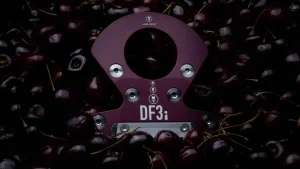
Using a handheld device, you breathe in and out of it, adjusting the amount of resistance to make it easier or harder to suck and blow air.
Basically, dumbbells for your breathing muscles.
And just as dumbbells can strengthen your legs and arms, RMT can strengthen the muscles involved in inhaling and exhaling, including the diaphragm and deep core stabilizers (transversus abdominis).
While more jacked breathing muscles don’t automatically increase your breath holding skills, they do help you inhale and exhale more effectively, which can lead to underwaters with less breathlessness and fewer broken breakouts from rushing to get to the surface.
How Respiratory Muscle Training Can Improve Your Underwaters
Okay, while giving your breathing muscles a six-pack is neato, there is some research that shows how this kind of training can directly help our underwater dolphin kicking.
Including:
Longer underwaters
Respiratory muscle training can help you dolphin kick out further.
A study by Vaisckova et al. (2017) took a group of fin-swimmers—yup, the swimmers who literally underwater dolphin kick for sport—and had them do a month of respiratory muscle training.
Maximum underwater distance shot up by 27% and swimmers also saw improved inspiratory and expiratory muscle strength.
For swimmers who have a kick count or distance in mind, but are gasping when surfacing or are surfacing well short of their mark, respiratory muscle training can help smoothen the transition to stroke one and make it less frantic.
Better breath control at the surface, too
Another benefit of stronger breathing muscles is that you can manage your breathing more efficiently when swimming all-out, whether that’s underwater or at the surface.
Tan et al. (2023) found that after swimmers did some respiratory muscle training they took fewer breaths when sprint swimming. They also swam longer after diving in the water before taking their first breath.
Stronger breathing muscles mean that you can suck down more air with each breath, extending the time between breaths.
More comfortable underwaters
Every swimmer knows that rising and burning feeling that happens when we need to breathe. As CO2 rises, the feeling of breathlessness turns into that alarm in your phone that shoots you out of bed in the morning.
Respiratory muscle training can also increase comfort under the water amidst rising carbon dioxide levels. Araujo et al. (2024) had swimmers do this kind of training and found that they reported much less breathlessness and more comfortable underwater.
Perhaps the biggest mental benefit of this kind of breath training is the added confidence and comfort you get underwater.
Adding Respiratory Muscle Training to Your Dolphin Kick Prep
Another advantage of RMT? The convenience!
You don’t need to get into the water, much less drive to the pool. No breathing patterns or “lung buster” sets required.
All you need is an appropriate RMT device and a structured routine.
Start with moderate resistance, inhale and exhale fully (the exhale in particular basically turns into a core workout if you empty your lungs), and gradually increase resistance in the weeks and months ahead.
Your breathing muscles respond to progressive overload just like the rest of your muscles.
A four-week study (Xu and Fan, 2026) with synchro swimmers compared respiratory muscle training with fixed resistance (same load all four weeks) and progressive resistance (adjusted and increased weekly).
Both groups improved, but the swimmers who slowly increased resistance reaped bigger gains in breathing muscle strength and lung function.
Additionally, make sure to space out this kind of training from your swim workouts and especially races.
These are muscles, after all, and gassing them out right before a big swim means your swimming—whether that’s a main set or the big race—will suffer (Muranaka et al., 2021).
Wrapping Things Up
If you’re serious about your dolphin kick, the odds are great that you’re already doing most of the work to make it awesome.
The core training, the focus on buttery undulation, developing stronger hips, and whipping those feet up and down.
But all that hard work has a ceiling if breathlessness consistently forces you to the surface before you can really take advantage of it.
So keep putting in the work on your dolphin kick, and give yourself stronger breathing muscles to 1-2 punch your PBs on race day.
Happy kicking!
Level Up Your Underwater Dolphin Kick
Olivier Poirier-Leroy is a former national-level swimmer, 2x Olympic Trials qualifier, and author of several books for swimmers, including The Dolphin Kick Manual: The Swimmer’s Ultimate Guide to a Fast Underwater Dolphin Kick.
 The book is a beastly 240+ pages of actionable insights and research into elite dolphin kicking technique and performance. It details everything from mastering undulation to vortex recapturing to structuring a dryland program for dolphin kicking success.
The Dolphin Kick Manual combines evidence-based insights with a collection of 20 ready-to-go sets and a 6-week Action Plan to help swimmers set a course for dolphin kicking success.
Train smarter and kick faster.
👉👉👉 Learn more about The Dolphin Kick Manual