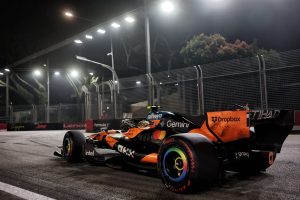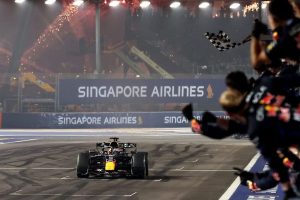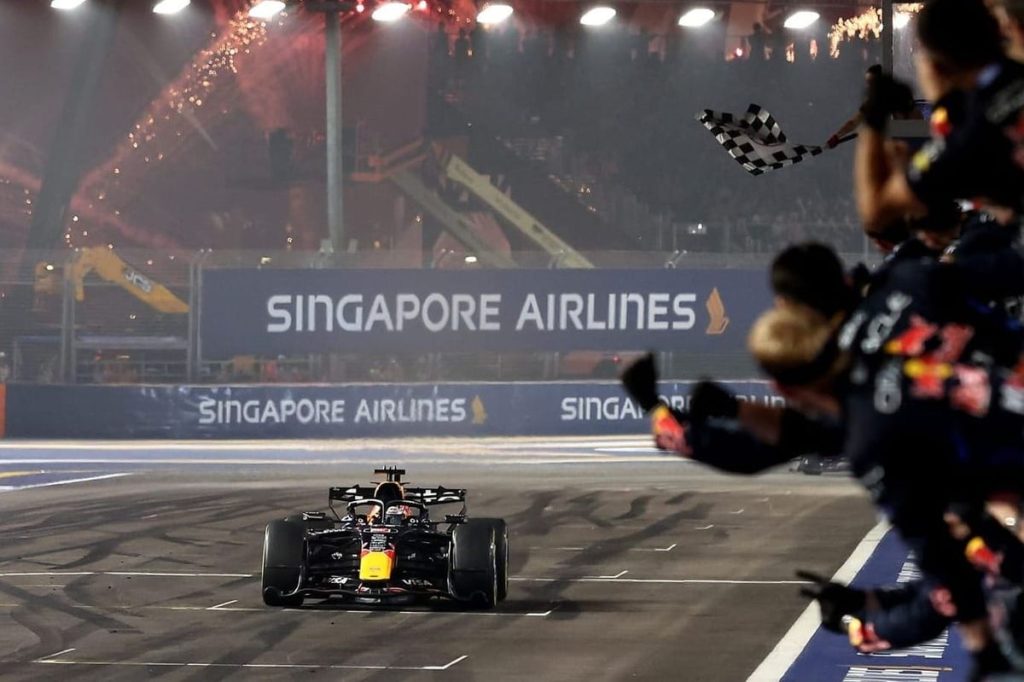
From a hole in the ground to a Formula 1 race winner in five years: Red Bull Powertrains delivering victories in its first year as an engine maker is unprecedented in the modern era.
But success was never a foregone conclusion, and as such this was perhaps the biggest gamble in Red Bull’s F1 history.
If it had flopped, there was a very real danger of it losing star driver Max Verstappen, key personnel and sponsors.
It’s no wonder current Red Bull team principal Laurent Mekies told The Race it was “the sort of project that would be refused by every board in the world” and, in the words of his predecessor Christian Horner, had Red Bull personnel asking: “Why the hell are we doing this?”
The story of how it went from a bold dream to the point of Verstappen’s triumphs in Malaysia and Singapore is fascinating, but it is one where some key factors have emerged that explain how Red Bull was able to take on the might of major car manufacturers and come out on top.
Strong foundations
One certainty from how things have played out this year is that the Red Bull engine project had in place strong foundations by the time it hit the track for the first time at the Barcelona 2026 shakedown.
That rock-solid basis was the result of decisions taken by Red Bull and former team principal Horner during the creation of the project.
Horner had been instrumental in lobbying for a cost cap and strict homologation rules to come into play for the new F1 rules era, which meant Red Bull’s start-up had the chance of taking on established manufacturers that previously would not have blinked at throwing $500 million or more per season at their efforts.
There was also no way the project would have been given a green light without the guarantee of the financial support needed from its parent company.
That is why, when Horner got the sign off for Red Bull Powertrains in February 2021, the company was able to go from no factory, no tools, and just a single staff member at Milton Keynes who had proper experience with engines to having a facility up and running in 55 weeks.
Horner had also gone out of his way to personally oversee a recruitment drive to attract some of the best engine brains in F1, including many from main rival Mercedes.
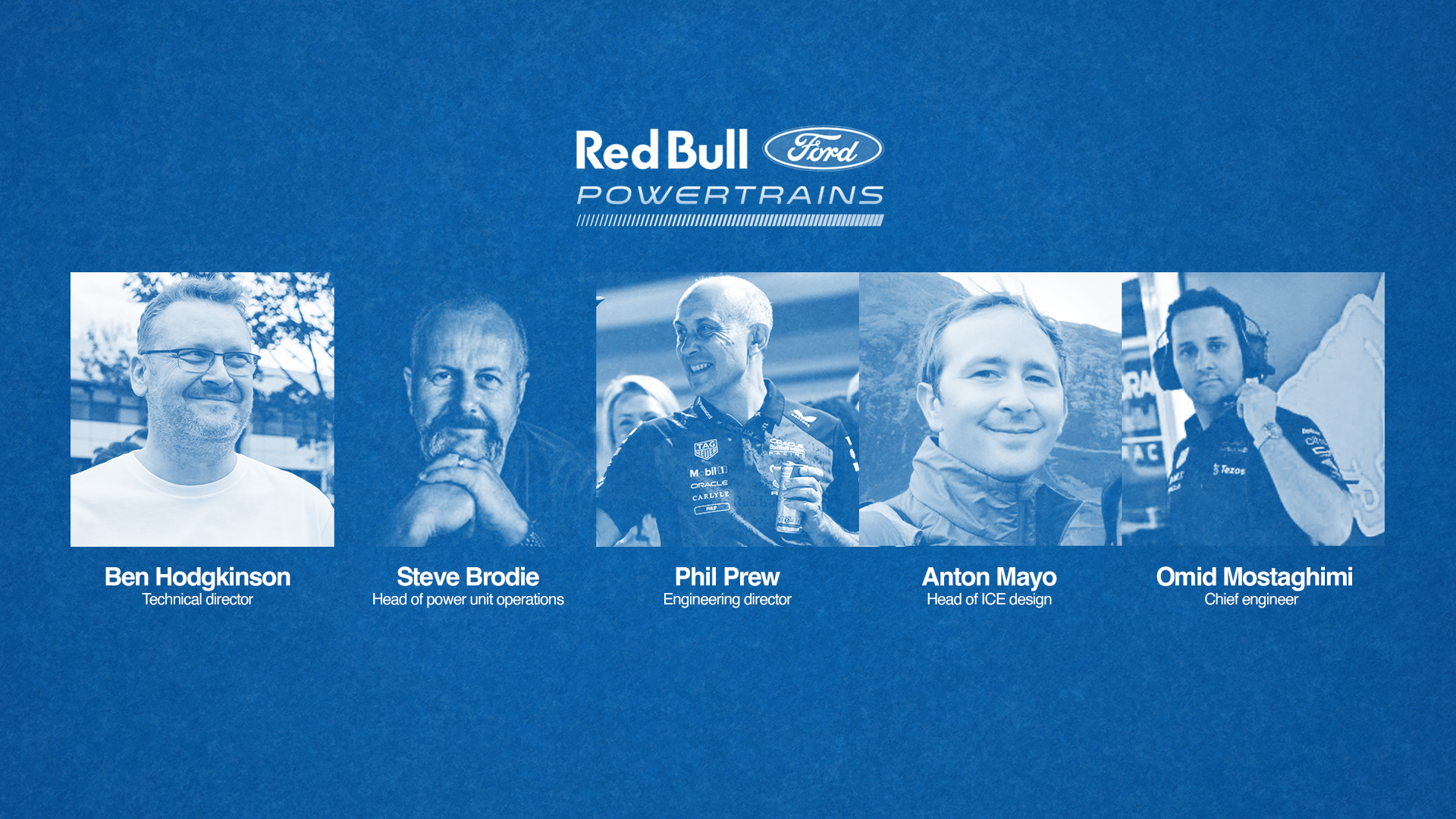
Technical director Ben Hodgkinson, Steve Brodie, its head of combustion engine operations, engineering director Phil Prew, Anton Mayo (head of combustion power unit design) and Omid Mostaghimi, now chief engineer, all chose to defect to the new venture.
As Hodgkinson told The Race about why the project has worked so well: “A lot of it is to do with the belief that Red Bull has shown in the project, and the fact that they completely committed to trying to compete at that sort of level.
“One of the reasons that persuaded me to join was that the size of their ambition was enormous. They weren’t planning on just doing the bare minimum to create a power unit.”
By August 2022, Red Bull was on its way as it fired up its own first internal combustion engine for the first time.
But despite things moving quickly, Horner had his fair share of sleepless nights about whether Red Bull had bitten off more than it could chew.
Things had been complicated by Honda coming back to the table after deciding to make a U-turn on its F1 exit.
There were some preliminary discussions about Honda producing the electrical elements for the Red Bull engine, but a deal proved too difficult to achieve. Red Bull stuck to its plan while Honda ended up doing a deal with Aston Martin instead.
Then there were factions within Red Bull, including motorsport advisor Helmut Marko, who were deeply sceptical about the chances of it matching the success it was having with Honda at the time.
Porsche out, Ford in
Even team founder Dietrich Mateschitz had some concerns, which is why when Porsche began evaluating a plan to move into F1, thoughts shifted towards a partnership that could bring Red Bull money and automotive expertise.
By the summer of 2022, talks had advanced enough for there to be an outline agreement for Porsche to buy 50% of the powertrains business, with a further option to buy 50% of Red Bull Racing from 2026.
But despite the deal being close to sign-off, Horner started having doubts. Red Bull Powertrains seemed to be better-prepared for the 2026 rules than Porsche – which had no F1 design capability, no suitable dynos, and nothing of substantive use on the technical front to offer.
Horner was also sceptical about Red Bull being run as a 50/50 committee, which risked the team losing the agility and independence that had been a mainstay of its prior success in F1.
So despite going, as one source said, “to the altar” with Porsche, Red Bull walked away from the deal in September 2022, just one month before Mateschitz died following a battle with cancer.
The collapse of the Porsche deal grabbed headlines, and got the attention of American car giant Ford.
Its Ford Racing division’s global director, Mark Rushbrook, had been considering an F1 return for the Blue Oval, and had been speaking to other teams and even pondered plans for Ford to build its own engine.
Having read the Porsche news, Rushbrook got hold of Horner’s email address and dropped a brief message that basically said: “Hey, do you want to talk?”
Horner replied yes and a meeting took place shortly afterwards with Rushbrook in Milton Keynes, where there seemed the potential for a deal to be done.
Then, on the way to the Brazilian Grand Prix in 2022, Horner wanted to meet more of Ford’s senior management, so he arranged a get-together at Ford’s HQ in Dearborn, Michigan with executive chair Bill Ford and CEO Jim Farley.
Horner knew that he was on to a good thing when Farley walked into that meeting with a Sergio Perez cap on. A deal was quickly thrashed out and was announced in February 2023.
A factory fit for purpose
While starting an engine manufacturer from scratch had its difficulties, and was not cheap, there were some upsides to doing it that way.
For a start, the organisation was structured around the cost cap – so it could build up to the roughly 600 staff it needed for the F1 project, rather than having to cut back like other manufacturers.
A clean sheet meant every room could be laid out so it was a perfect fit for the current rules.
As Hodgkinson explained: “I think we’re probably the only power unit manufacturer on the grid that has been purpose-built around the regulations.
“Everyone else has got something that’s been pre-existing, and then had to evolve their business to match the regulations, whereas we knew what they were when we designed where to put our dynos and what types to buy and what rigs to go for.
“Plus, more than that, we had the collective knowledge of so many people’s experience at other power unit manufacturers, and knew all the limits that we used to bump into.
“So we made sure that those limits were removed when creating this facility.”
Getting everything fit for purpose was helped by events along the way, too, with dynos originally intended to be used by Porsche for its F1 project having been diverted and purchased by Red Bull instead.
These dynos were pre-installed in containers that were shipped to Milton Keynes and put in place by crane, before the rest of the building was erected around them.
There is another clear example of how RBPT built things around the regulations.
Red Bull knew that, as part of the 2026 rules, the number and type of dynos allowed was restricted, as was how much they could be run – effectively 710 hours for the 2026 season.
But what is not limited was the use of small rigs to test individual items, such as fuel pumps, water systems, oil systems and spark plugs. These can be tested without limit for performance and non-destructive reliability testing, and in a much more cost-effective way than if they are run on an actual engine.
To capitalise on this, Red Bull set up a bespoke room for rig testing. It quickly earned the nickname the Donut.
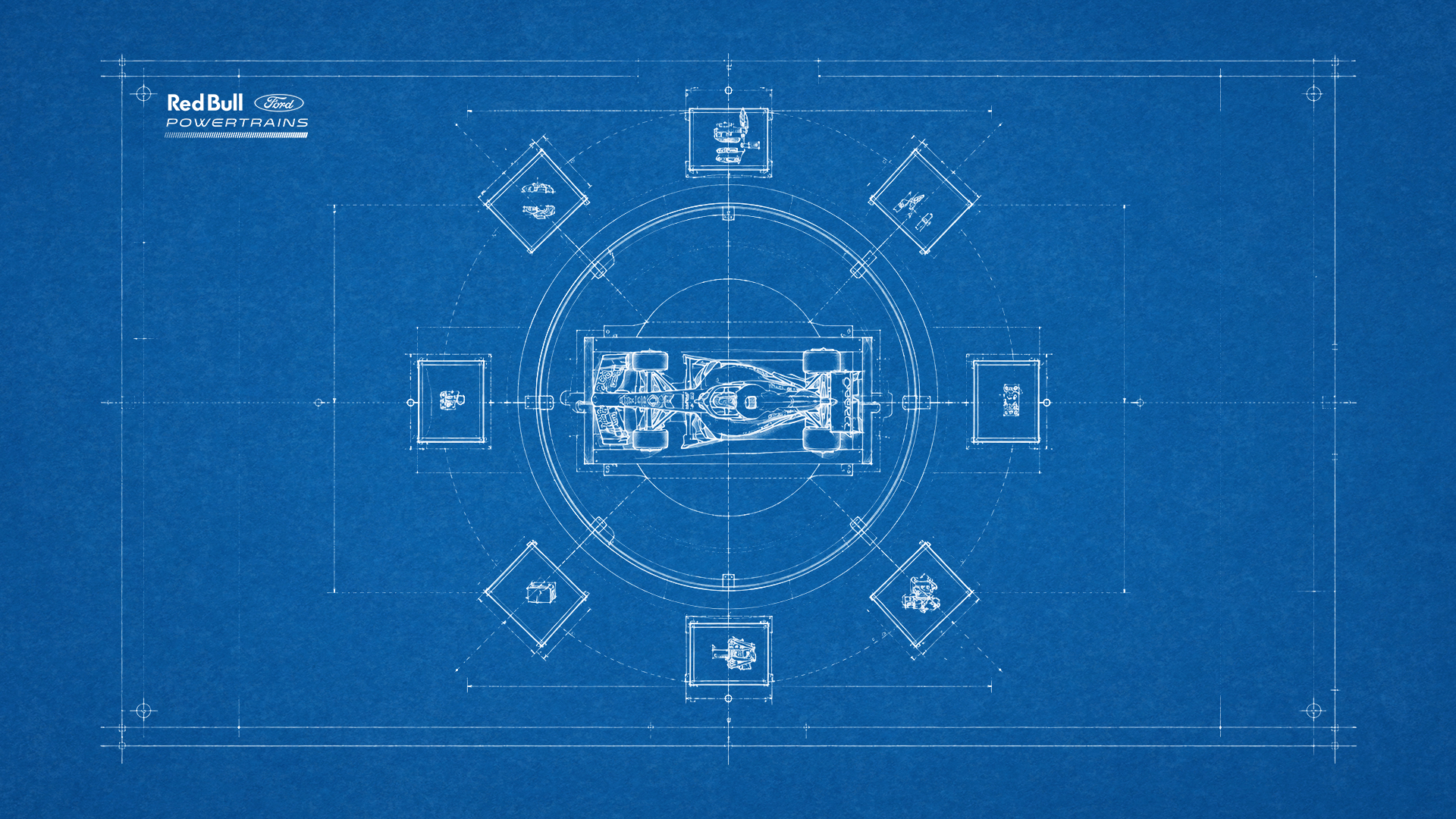
At its centre are computers and engineers, while all around are countless rigs filled with different types of fuel rails and pumps to check everything is working at the right operating temperatures.
If something passes a rig test then it minimises the chances of things going wrong when it’s on the dyno or on the car.
Beyond the factory design, Red Bull made smart use of relationships it already had in place on the chassis front, too – like with Oracle, its title partner. Oracle helped with data storage, computational capacity, CFD simulations and AI.
Then there was the assistance that came from Ford, too. In the early days, as Red Bull was still without a full working factory, it could tap into the American car giant’s engineering capabilities in building parts and cutting-edge manufacturing expertise.
For example, Red Bull Powertrains tested its turbocharger design on Ford’s gas stands before it was able to build its own.
It was also able to pull across staff members that it needed instant access to when there were some tricky positions to fill.
The people factor
That fits nicely with the final critical element contributing to Red Bull’s success: the people themselves.
In having a bold project in play, Red Bull attracted bold people with the mindset needed to push things forward in the chase for success.
This was twinned with Hodgkinson making sure he created a culture where creativity could flourish.
Hodgkinson has talked in the past about there being an organic filter in place – that the very mindset of people willing to sign up for such a risk-taking project delivered the exact level of risk-taking needed to make it successful.
What he also said was critical was putting in place the right environment for good ideas to flourish.
“It was very important to me that our culture was one that really championed individuals in the team and let everybody have a creative input and was something that really championed innovation,” he said.
“I have described many times to my chiefs and heads of department that a successful idea has something like a one-in-10 hit rate. So for every idea you come up with, only one works out of 10.
“So I asked myself – what culture does an engineer, following nine unsuccessful attempts in a row, need around them? It needs someone that’s going to pick them up and dust them down and say, ‘Go again, you’ve got this. The next one, you’ll get it’.
“I tried to make sure that was our culture right from the beginning and right from the ground up. That marries beautifully with the Red Bull’s ‘just go for it’ culture. It was a kind of perfect mix.”
Belief, not expectation
All of this laid the foundations for Red Bull to hit the ground running when its new power unit ran at the first pre-season shakedown test at Barcelona.
As reported by The Race, Red Bull has made significant gains over the course of the season from calibration work in marrying up power output, fuel consumption, energy harvesting, and deployment strategies.
Hodgkinson described its internal combustion engine as a bit of a “diva” in terms of characteristics – and this is something Red Bull needs to tame if further steps are to come. And this will be possible even if Red Bull does not get granted any additional upgrade opportunities because of its benchmark status according to the FIA.
Nevertheless, there’s no doubt Red Bull has already exceeded what many thought was going to be possible with its 2026 car and engine project.
Horner rues not still being there to see the Red Bull engine hit the track for the first time – but he thought the same ingredients that helped make the team so successful were critical for the power unit to deliver, too.
Speaking recently to The Race F1 Podcast, Horner said: “It demonstrated to me that, again, by applying that philosophy of getting a great group of people together, empowering them, giving them clear direction, and creating the right culture, giving them the tools…for that engine to go out and be judged to be the most performant engine in Formula 1 in its debut year and win on its 16th attempt, arguably, I see that as one of my biggest achievements during my time at Red Bull.
“And again, it demonstrates to me the power of people, culture, and just everybody being focused on the same objective.”
Hodgkinson himself took nothing for granted about what could be delivered this year, but certainly had some conviction about what was on the cards.
“I’m going to end up sounding a bit like Ted Lasso [the fictional American football coach turned Premier League manager from Apple TV’s eponymous hit show], but I always believed it was possible,” he said. “I genuinely always did, but I never expected it.
“Me, together with my leadership team, had a vision about what we’d do in order to get to that point and I actually believed it was possible earlier than race 16.
“It’s been quite a challenging season for various reasons and I’m thrilled to have finally done it, but the expectation hasn’t crept in because I think it’s really dangerous for an F1 engineer to expect anything.”
Red Bull’s success is not just about a good start, a clever factory design, and the right people.
As Horner said, it was about creating an environment where those willing to take risks could thrive and make the most of a clean-sheet opportunity presented by the rules.
That approach has delivered results almost immediately, and Red Bull’s gamble in committing to the project has paid off.
The question now is just how much more it can achieve in the future.