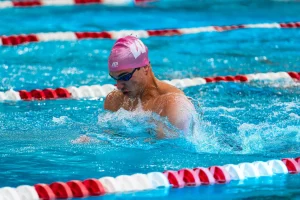
For some people, swimming is a sport. For others, it is a way to stay fit, a competitive pursuit, or simply a place to escape the noise of everyday life. But for those of us who have spent years in the pool, swimming can become something much bigger. It becomes part of our identity, our routine, and the way we understand ourselves.
For me, swimming has also become a mission.
My journey began in 2009, when I first saw a swimming pool at a government stadium. I still remember the fear I felt during my first swimming class. The water seemed intimidating, and I struggled so much that I eventually quit. At the time, I had no idea that the same water that frightened me would one day shape my life.
In 2010, I returned to the pool. This time, with my father’s encouragement, I began swimming in deeper water with a tube. Gradually, I gained confidence and started swimming longer distances. A friend, Satyam, and an encouraging coach from Bengal helped me discover the competitive side of the sport.
What started as an uncertain first experience eventually became a lifelong pursuit. I went on to compete, win medals at the national level, and represent myself in Masters swimming competitions. Over the years, swimming taught me much more than how to move efficiently through water.
But as my journey progressed, my understanding of why I swim began to change.
Swimming Taught Me That Progress Requires Patience
Swimming is an honest sport. You can put in weeks of training, work on your technique, improve your turns, and refine your pacing, but eventually, you have to get into the water and see what you can do.
The clock does not know how hard your day was. It does not know how many sacrifices you made to get to practice. It simply records your performance.
That honesty can be frustrating, but it is also one of the reasons I love swimming.
Improvement rarely happens overnight. Sometimes, it means shaving a fraction of a second off a race. At other times, it means completing a distance that once seemed impossible, learning to breathe comfortably, or overcoming the fear of deep water.
My own journey has taught me that every achievement begins with small, often unremarkable steps. You do not have to start as a talented swimmer. You just have to be willing to start, learn, and keep going.
And that is a lesson I try to pass on to every beginner I teach.
I Swim Because I Know What It Feels Like to Be a Beginner
When I look at a beginner standing nervously at the edge of a swimming pool, I see something familiar.
I remember being that person.
I remember the fear, the uncertainty, and the feeling of not knowing whether I could do it. That memory influences the way I approach coaching today.
I believe that learning to swim should begin with confidence, not pressure. A beginner should not feel embarrassed about being afraid of water, struggling with breathing, or needing more time to learn a skill.
As coaches and experienced swimmers, it is easy to forget how difficult the simplest things can feel to someone who is just starting. Floating, putting the face underwater, exhaling, and coordinating the arms and legs may seem natural to us now, but they can be enormous challenges for a beginner.
This is especially important in a country like India, where many people grow up without access to proper swimming facilities or structured instruction.
For them, the first challenge is not winning a race. It is getting an opportunity to learn safely and confidently.
I want more people to experience the joy of swimming without feeling that they need to become competitive athletes to deserve a place in the pool.
My Mission Goes Beyond Competitive Swimming
As a competitive swimmer, medals and timings have always mattered to me. They are a way to measure progress, test your limits, and see the results of your training.
But I have increasingly realised that the future of swimming cannot depend only on the people who reach the podium.
What about the child who has never entered a swimming pool? The adult who wants to learn but feels embarrassed to begin at their age? The person who lives in a small city and has no access to a knowledgeable coach? Or the swimmer who loves the sport but has no ambition to compete?
These people matter just as much to the growth of swimming.
My primary goal is to help improve swimming at the grassroots level, particularly in India. I want to make swimming education more accessible, help beginners learn the right fundamentals, and encourage more people to develop a lifelong relationship with the water.
Through my YouTube channel, Swimming By Sanuj, I have tried to make swimming knowledge accessible to people who might otherwise struggle to find reliable guidance. With a community of more than a million subscribers, I have seen how many people are looking for simple explanations of swimming technique, breathing, common mistakes, and the process of learning to swim.
For me, this is one of the most meaningful aspects of my journey.
A video explaining how to exhale underwater might help someone who has been struggling for months. A simple explanation of body position might help a beginner swim more comfortably. A reassuring message might convince someone not to give up after a difficult first lesson.
These may not be achievements that appear on a medal table, but they can make a real difference in someone’s swimming journey.
I want to help build a culture in which swimming is not viewed only as a competitive sport, but also as an essential life skill, a form of exercise, and an activity people can enjoy throughout their lives.
I Swim Because Swimming Gives Me a Way to Give Back
One of the most rewarding parts of coaching is watching someone do something they once believed they could not do.
It might be a child who finally learns to float independently, an adult who overcomes a lifelong fear of water, or a beginner who completes their first uninterrupted lap.
The expression on their face often tells you everything.
As a swimmer, I have experienced the satisfaction of improving my own performance. As a coach, I have discovered a different kind of satisfaction: helping someone else discover what they are capable of doing.
It has also changed the way I measure success.
Of course, I still have personal goals in the pool. I still want to improve my race times, challenge myself in competition, and discover my own limits. Competitive swimming continues to give me something to work towards.
But I no longer believe that the value of my swimming journey can be measured only by my own performances.
If my experience can help another person learn to swim, if my knowledge can help a beginner avoid common mistakes, or if my work can encourage more people to take up swimming, then the impact of my journey extends far beyond my own lane.
That is a responsibility I take seriously.
The Pool Is Also Where I Find Myself
Like many swimmers, I have found that the pool offers a rare kind of quiet.
Once I enter the water, the distractions of everyday life begin to fade. There are no notifications to check, no messages to answer, and no endless stream of information competing for my attention.
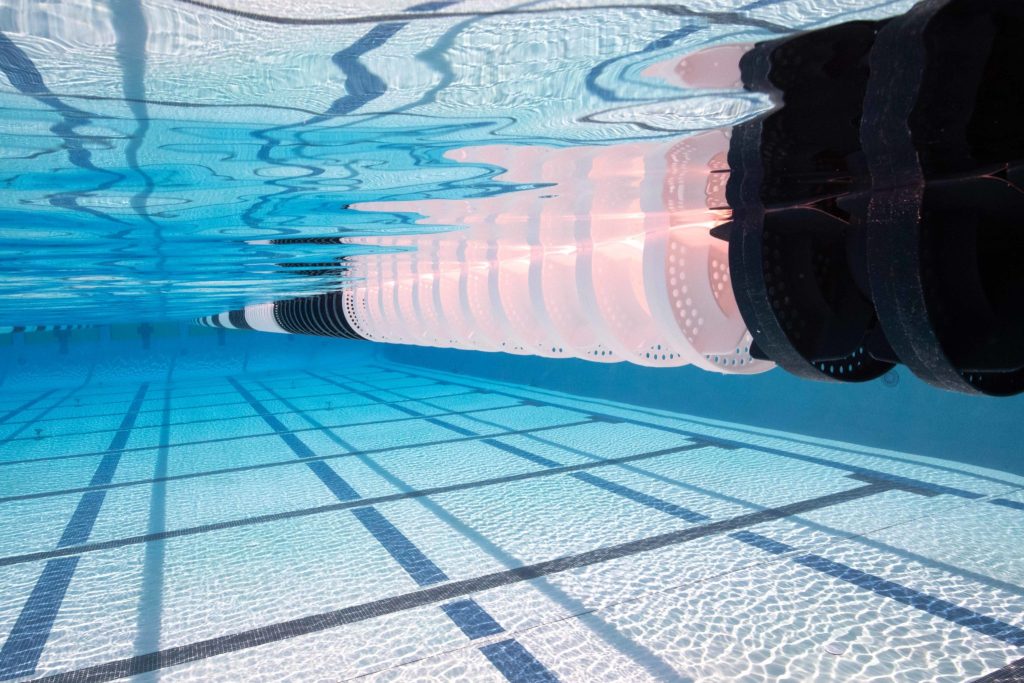
There is simply the water, the rhythm of my strokes, my breathing, and the black line at the bottom of the pool.
Some days, swimming feels effortless. On others, even a familiar set can feel difficult. But there is something reassuring about returning to the same environment and doing the work regardless of how you feel.
Swimming has been a source of discipline, confidence, and perspective throughout my life. It has taught me to accept difficult days without allowing them to define me.
It has also reminded me that there is always something left to learn. No matter how experienced we become, the water has a way of exposing our weaknesses and encouraging us to work on them.
Perhaps that is why so many of us keep returning to the pool long after our competitive ambitions have changed.
Why I Still Swim
If someone asks me today why I swim, I could give them several answers.
I swim because I love the challenge of competition. I swim because I want to keep improving. I swim because the water gives me a sense of freedom that is difficult to find elsewhere.
But there is another reason now.
I swim because I want more people to have the opportunity to experience what swimming has given me.
My journey began with fear. It continued through training, competition, and the pursuit of personal achievements. Today, I want that journey to contribute to something larger: a stronger swimming culture in India, where learning to swim is more accessible and where beginners are encouraged rather than intimidated.
We will always need competitive swimmers who chase records, represent their countries, and inspire the next generation. Their achievements are important. But we also need more people teaching beginners, improving access to swimming education, and helping ordinary people feel comfortable and safe in the water.
The two goals are not in conflict. A stronger grassroots foundation can help create a stronger competitive future, while a healthy swimming culture gives people reasons to remain involved long after their racing days are over.
I still love competing. I still love the feeling of pushing myself in the water. But my purpose has grown beyond the medals I might win or the times I might achieve.
I want to help make swimming better for the person taking their first nervous step into a pool, just as much as I want to improve as a swimmer myself.
Because, in the end, swimming gave me much more than a sport to pursue. It gave me a purpose to share.
That is why I swim.