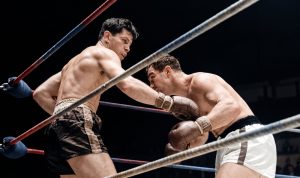
Chris Billam-Smith gets back in the ring against Cheavon Clarke on Saturday, November 7, at Copper Box Arena in London. The bout headlines Zuffa Boxing 12, putting the former WBO cruiserweight champion in front of a man holding an amateur victory over him from 2016.
Billam-Smith enters at 22-2 with 14 knockouts, aiming to hold his place near the front of the division. Clarke comes in at 12-2 with 9 knockouts, looking to make his previous success count on a major professional stage.
The preliminary bouts begin at 12 p.m. Eastern Time, which is 5 p.m. Greenwich Mean Time. The main card takes over at 2 p.m. Eastern, or 7 p.m. locally in the UK. The headline ring walks are expected around 5 p.m. Eastern and 10 p.m. Greenwich Mean Time, though that timing will shift depending on how quickly the supporting fights wrap up. Viewers in the United States and Canada can watch the card through Paramount Plus. Fans in the UK and Ireland can watch the main card on Sky Sports, with online streaming through NOW and the preliminary matches carried on Sky digital platforms.
The supporting lineup features Denzel Bentley taking on Shane Mosley Jr. in a ten round middleweight co-feature. Heavyweight Da’Mazion Vanhouter meets Ivan Balaz on the main portion of the show, followed by a cruiserweight match between Lucas Roehrig and Connal McDonald, a middleweight bout featuring Sam Hickey against Amaury Massenaux, and Kayla Allen versus Julia Igel. The preliminary portion includes Zach Parker against Umar Dzambekov at light heavyweight, Masood Abdulah taking on Adan Palma, and the debut appearance of Vinnie Kemp.
Both main event fighters fought grueling bouts in June. Billam-Smith wore down Ryan Rozicki until Rozicki stayed on his stool after the seventh round. Clarke hit the canvas twice in the fourth round against Jack Massey, yet recovered to stop Massey three rounds later. Clarke owns the quicker hands over ten rounds, which means Billam-Smith cannot afford to spend long stretches following his opponent around the perimeter.
Billam-Smith must use his jab to establish distance, force Clarke toward the ropes, and work on the inside to sap Clarke of his bounce. Even if Billam-Smith lands clean early, Clarke has already shown he carries fight-ending power when wounded, meaning the former champion needs sharp discipline to avoid getting caught on the way in.
For Billam-Smith, he is entering that dangerous zone where a fighter’s style catches up with their shelf life, making this matchup against Clarke a massive upset potential.
Look at his recent stretch. Billam-Smith does not have easy nights. He does not box on the outside and slip shots; he relies on imposing physical will, eating three clean punches to land four of his own. By the final bell against Gilberto Ramirez, Brandon Glanton, and Ryan Rozicki, his face looked like ground beef. His skin splits if someone looks at him wrong, and the scar tissue around his eyes has become an open invitation for referees and ringside doctors to intervene.
When a pressure fighter like Billiam-Smith, who absorbs heavy punishment, starts racking up rounds at 35 or 36, the decline rarely happens gradually. It happens off a cliff. The punch resistance cracks, the reflexes slow by half a second, and suddenly shots that used to get brushed off start rattling the frame.
Clarke is precisely the wrong stylistic matchup for an aging, battle-worn brawler to face in a ten-round fight. He has the amateur pedigree and hand speed to exploit Billam-Smith’s porous defense. Billam-Smith comes forward in straight lines with his chin up. Clarke has already proven in the amateurs that his hand speed gives Billam-Smith fits, and fast combinations against an opponent with compromised scar tissue is a recipe for severe cuts early.
Despite his advanced age, Clarke still possesses real power and resilience. Jack Massey dropped Clarke twice in the fourth round, and Clarke still showed the composure and engine to recover and stop Massey three rounds later. If Billam-Smith hurts Clarke, he cannot just swarm carelessly, because Clarke throws violent counters when trapped.
At this point, the schedule works entirely against Billam-Smith. At ten rounds instead of twelve, the distance favors the explosive, faster starter. Billam-Smith typically needs eight or nine rounds of grinding pressure to break a man down. In a ten-rounder, if Clarke banks four of the first six rounds behind speed and angles, Billam-Smith runs out of road and has to chase recklessly.
If Billam-Smith gets dragged into another trench war where he has to swallow flush shots to make Clarke work, this has all the ingredients of an ambush. Clarke has the speed, the confidence from their amateur history, and the firepower to hand the former champion a costly defeat.